Hot air weaponry

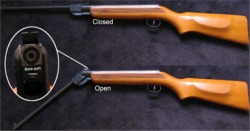
More marginalia from the Scotland Bill.  Section 11 would give the Scottish Parliament legislative competence in relation to air weapons.  Specifically, it would give Ministers the power to require a licence to use an airgun or even to prohibit them altogether.

The SNP have been calling for tighter controls on air weapons for some years now and once the legislation is passed (c. 2015) it seems likely that some additional controls will be introduced in Scotland.  It also seems likely that the restrictions will be tighter north of the border than in England and Wales.

What does not seem likely, however, is that this will lead to the installation of border patrols along the line of Hadrian’s Wall.

But that is the faintly ridiculous line being pedalled by the Countryside Alliance and the British Association for Shooting and Conservation.  In an article featured in Shooting UK, the Countryside Alliance’s shooting campaign manager is quoted as being of the view:

“If licensing is introduced, there would be a very real chance of border controls and restrictions on free flow of general trade.”

No.  There would be precisely no chance of that happening.  Idiot.

Unless that’s part of the SNP’s dastardly plan to introduce independence by the back door?

Posted in Constitutional Law, Criminal Law, News, Scottish Government | Tagged , , , | Leave a comment

Scot of the Antarctic

AntarcticaThere has been much commentary this week on the new Scotland Bill.  Many have concentrated on the new tax raising arrangements and new legislative competences proposed for the Scottish Parliament.  But it’s not all one way traffic…

I wish to draw your attention to the shocking plans to strip Holyrood of its powers with regard to Antarctica.  You heard me, Antarctica.  Section 14 of the Bill adds to the list of reserved matters the “Regulation of Activities in Antarctica”.  And the Scottish Government seems perfectly content to see these powers disappear without so much as a whimper!  Call themselves nationalists?

As the explanatory notes explain:

Clause 14: Antarctica

60. This clause re-reserves the regulation of activities in Antarctica. The effect of this clause is that it will no longer be within the legislative competence of the Scottish Parliament to pass Acts which relate to the regulation of activities in Antarctica. The Scottish Parliament has never in fact exercised this competence.

61. Subsection (2) provides that the amendment to Schedule 5 takes effect retrospectively, so that it is regarded as having effect from the date that Schedule 5 came into force. The effect of this provision is that executive functions in relation to the regulation of activities in Antarctica are regarded as never having transferred to the Scottish Ministers under section 53 of the 1998 Act (where they would otherwise have been exercisable within devolved competence) and always having been exercisable by Ministers of the Crown.

So, there is a short window of opportunity to legislate in this important area.  But what laws should be passed?  I asked my 8 year old son what new rules he would make if he was put in charge of the South Pole.  Here are his ideas:

  1. build lots of new ice houses and ice hotels so that people have somewhere nice to live, built by properly secure ice builders with boots (or ice skates);
  2. all ice houses and ice hotels must be equipped with blankets, and people staying in them must keep their clothes on in bed (unless they have warm pyjamas);
  3. everyone in Antarctica must have a pet husky dog, and they must ensure that the dog’s claws are sharp enough to grip on the ice – their sledge must also be grippy and have good reins in case of a bad accident;
  4. all husky dogs must wear special collars to let their owners know if they have been behaving or not; and
  5. everyone must wear proper warm clothes with sheepskin or animal fur, so they don’t catch a rash.

Not sure how the last one would go down with the animal rights people, but it’s a harsh environment down there and it calls for bold legislative action.  My son’s stated ambition when he grows up is to be Ruler of the South Pole.  I think he’d do a good job.

What rules would you make.  Please, keep on thinking.  The future well-being of the Antarctic may depend on it.

Posted in Just for Fun, Scottish Parliament | Tagged , | 11 Comments

The end of the End of Life Assistance Bill?

First, in the interests of full disclosure, I am a Christian and that inevitably influences my views on the following.  There is a comments section below where you can post any measured response you may have on this issue…

Margo MacDonald MSP saw her private member’s Bill (the End of Life Assistance (Scotland) Bill) defeated at its first reading in the Scottish Parliament on Wednesday by a convincing 84 votes to 16.

Much has been said on the topic on both sides and here is my two pennies worth…

I’m not an MSP and I hope never to be one, but had I been in the Chamber on Wednesday I am fairly certain that I would have voted against the Bill.  Why?  The laws we adopt as a nation say something about our views and our values and fundamentally, I think that legalising euthanasia would say that we are less concerned about the sanctity of human life.  I’ve couched that in spiritual terminology, but I don’t think you need to be religious to reach the view that there is an inherent value to a human life and that it ought not to be disposed of lightly – even if an individual human doesn’t see the value to life any more.

I recognise that there is an inherent unfairness in that people without disabilities are free to kill themselves without breaking the law, but that someone with a disability may be unable to do so.  However, there are lots of unfairnesses which arise from being physically disabled and the inability to get someone to help you to kill yourself without fear of criminal prosecution is not top of my list to deal with.

Despite the safeguards in the Bill, I am very concerned that a right to die would become for some people an expectation.  I also share the concerns of groups like Not Dead Yet about a legislative scheme that focuses on ending an “intolerable” life rather than looking to address “a lack of proper practical, emotional and medical support needed to live dignified lives”.

As they point out, the response to a non-disabled person approaching their doctor stating that they find life intolerable and want to kill themselves would be to offer support, counselling, possibly medication – all aimed at preventing the person from taking their own life.  Inherent in that response is an understanding that it’s not okay for people to be in that state of mind.  The NHS spends a good deal of time and money on suicide prevention.  Why should it be any different for disabled people?  It is significant that the BMA remains firmly opposed to physician assisted suicide.

I wonder whether there is also something about the way Scots law treats this area which makes it more difficult?  In England and Wales, there is a specific offence of assisting a suicide – and any equivalent legislation in Westminster would decriminalise that offence (or alter the penalties).  In Scotland we face the rather more grisly prospect of dis-applying the law of murder or culpable homicide in prescribed circumstances, but only in relation to disabled people.  I must confess that my response is at least as much an emotional one as it is intellectual, and reading the dry mechanics of the requests made to a medic that were to be required under the Bill made me shudder.

Recent polling suggests that it is a minority view that I hold, but hopefully this goes some way to explaining why I hold it.

I would also recommend that you read this article:

“We should help the sick to live, not hasten their deaths” The Herald 9 July 2009

And, in the interests of balance, the opposing viewpoint:

“Margo’s Bill goes gently into that good night” Lallands Peat Worrier 2 December 2010

As The Herald’s leader today suggested, it is good to debate issues of importance like this and as Margo MacDonald has pledged to reintroduce the Bill (or similar) if re-elected, then Holyrood may get another chance to do so before too long.

Posted in Criminal Law, News, Scottish Parliament | Tagged , | 1 Comment

An apostrophe astray?

I am pleased to be able to let you know that my latest Journal website review is ready for your consumption.  It is titled “New look for the young” and is all about the new website of the Scottish Young Lawyer’s Association.  On submission, the editor pointed out to me the misused apostrophe in the SYLA’s own title, but I was much to polite to point that out in public.

An extract:

Overall, this is a decent website, built by kit and a little untidy around the edges, but perfectly acceptable for all that. It has an annoying (and non-accessible) habit of using the word “here” for many of the internal links and does sometimes take you by surprise by leaping without warning to an external site. These are, however, quite common faults and should be easy to fix. Please fix them, young lawyers, they are spoiling your (otherwise very good) website.

Posted in Journal Website Reviews | 1 Comment

As much as possible

During the last Holyrood elections, my colleague and I paid a visit to a candidate, who is now in a position of some responsibility and influence.  We asked the candidate what his/her position was on law centres.  The answer was: “I believe in law centres.  I think there should be more of them.”

I mention this in passing merely as a prelude to the Justice section of the Scottish Government‘s spending plans, released today.  There are some very interesting sections, including the following:

“maintenance of the prison and court estates will be reduced to the minimum sustainable levels”

In addition, I think consideration should be given to turning the heating down during the summer months.  This would also assist the Scottish Court Service in meeting its carbon targets.

“The priority will be to maintain as much as possible a legal aid system in Scotland that enables people who could not otherwise pursue or defend their rights to be able to do so.”

That’s good news, although the key question must obviously be: what does “as much as possible” mean?

“we will deliver cheaper methods of provision including through expansion of the role taken by the Public Defence Solicitors’ Office (PDSO). This will offer an increased choice of a different type of service and allow a greater ability to control costs.”

I don’t practice criminal law, so I don’t know so much about the PDSO and can’t see why it would be cheaper – after all you can’t abate SLAB employees’ salary costs in the same way that criminal practitioners’ accounts often are.  Also, I’m not sure how the PDSO offers a greater ability to control costs?  No mention of the PDSO’s civil cousin, CLAO here, but perhaps that’s one of the things meant by “cheaper methods of provision”?

“taking a structured approach to fees for counsel in civil and children’s cases”

“demands on the legal aid budget throughout 2011-12 … will be managed throughout the year.”

Oh dear – that doesn’t sound great …

“fees should recover the costs to public funds of providing access to court and Public Guardian services”

That sounds expensive.  Also, if we’re going to be taking that kind of commercial approach do we get a refund if we turn up at Court only to find that there isn’t a Sheriff available to hear the case?

And what of the humble law centre?  Delivering efficient access to justice, accountable to the local community, supported by dedicated volunteers and modestly paid staff?  There is no mention of law centres.

PS.  Has anyone else noticed the similarity of the logos (and acronyms) of PDSO and PDSA?  The PDSA has a slogan: “for pets in need of vets”.  Maybe PDSO should adopt something similar (e.g. “for thieves in need of briefs”?).  Your suggestions are invited.

Posted in Criminal Law, Law Centres, Legal Aid, News, Scottish Court Service, Scottish Government | Tagged , , | Leave a comment

The Left Wing

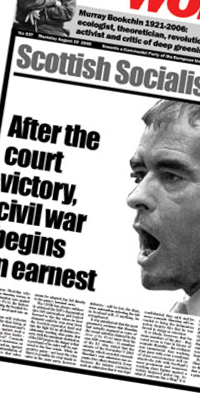
It’s been a while since I blogged on Tommy Sheridan’s perjury trial.  However it occurred to me that one of the consequences of representing himself was that it brought him face to face with his accusers.  This obviously paid dividends during the defamation hearing (or perhaps it was being face to face with the jury which assisted)?

In any event, in reading the BBC coverage, I note that it has – in effect – turned each hostile witness (and there are a few of them) into a mini-prosecutor.  Consider some of the statements which have been put, directly to Mr. Sheridan while cross-examining witnesses:

Bob Bird – “it proved that you had stood in court and lied … you duped them [the jury]”

George McNeilage – “You’re the real fraud.”

Alan McCombes – “You are a liar, Tommy. A pathological liar.”

Frances Curran – “Tommy, I would have expected more honesty and principle from you.”

Richard Venton – “I know this court is near a fish market, but some of the red herrings you’re throwing about are overpowering.”

Carolyn Leckie – “It absolutely frightened me how well you could lie, Tommy.”

Allison Kane – “[you] spun a web of lies off the bat”

Katrine Trolle – “There is only one person lying in court and it is you”

Colin Fox – “I do not lie, Mr Sheridan. I leave the lying up to you.”

Under normal circumstances, you wouldn’t get that repeated direct accusation of the accused – with the jury seeing and evaluating Sheridan’s response each time.  Is he riled?  Does he twinge?  Smile?  Shake his head?  Is he unmoved?  Inevitably, the jury will be picking up on all of this (even if it is unconsciously).

Was it a good idea to represent himself, then?  Time will tell.  However, it seems that Mr. Sheridan’s line includes a suggestion that there was a plot to “do him in” politically.  And with all this hostility from the witnesses, maybe he is starting to look like the underdog again?

It put me in mind of an episode of The West Wing, where CJ is trying to spin an investigation against them and decides on the following strategy for winning back public opinion:

“Leo, we need to be investigated by someone who wants to kill us just to watch us die.  We need someone perceived by the American people to be irresponsible, untrustworthy, partisan, ambitious and thirsty for the limelight.  Am I crazy or is this not a job for the U.S. House of Representatives?”

I loved The West Wing.  Here’s just one reason why.

Posted in Criminal Law, News | Tagged , | Leave a comment

Let us learn from the lips of death …


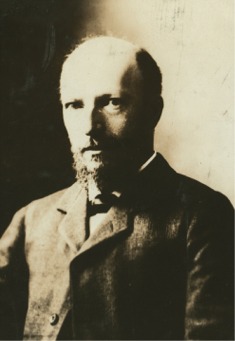
Felix Adler

Felix Adler (1851-1933)

A brief note to let you know that my latest yell.com post is online.  Bearing the title “Do not speak ill of the dead.” it reports on a forthcoming Scottish Government consultation which will discuss whether the law of defamation should be extended to cover dead people as well as those still living.

An excerpt:

“As the proposed law would only take effect in Scotland, would that then lead to a peculiarly macabre take on “libel tourism” which has affected Courts in England? Do the Scottish Government want to see representatives of dead millionaires queuing up outside the Court of Session because an online edition of a satirical magazine published in Los Angeles is read in Lesmahagow?”

The quote in the title of this post is by Felix Adler.  The full quote reads:

“Let us learn from the lips of death the lessons of life. Let us live truly while we live, live for what is true and good and lasting. And let the memory of our dead help us to do this. For they are not wholly separated from us, if we remain loyal to them. In spirit they are with us. And we may think of them as silent, invisible, but real presences in our households.”

Posted in Defamation, News, Scottish Government, Yell.com Solicitors Blog | Leave a comment

Bring back the belt!

An old chestnut, perhaps, but one which does have a habit of returning with unerring regularity.  The Herald reports that UKIP Scotland are calling for a return of corporal punishment to our schools, in an attempt to restore discipline and win votes.

As has been well documented, it was a Scottish case which led to the demise of the use of corporal punishment in schools across the United Kingdom.  The use of any corporal punishment in schools (public or independent) is now forbidden by domestic law (s.16, Standards in Scotland’s Schools etc. Act 2000) – but could the tawse really be brought back into use?  Well, perhaps…

In the celebrated case of Campbell and Cosans v. The United Kingdom, the European Court of Human Rights determined that the use of corporal punishment in state schools did not amount to a breach of Article 3 of the Convention (prohibition on torture and inhuman or degrading treatment or punishment).

The Court observed:

“Jeffrey Cosans may well have experienced feelings of apprehension or disquiet when he came close to an infliction of the tawse, but such feelings are not sufficient to amount to degrading treatment, within the meaning of Article 3 (art. 3).

“The same applies, a fortiori, to Gordon Campbell since he was never directly threatened with corporal punishment. It is true that counsel for his mother alleged at the hearings that group tension and a sense of alienation in the pupil are induced by the very existence of this practice but, even if this be so, these effects fall into a different category from humiliation or debasement.

“To sum up, no violation of Article 3 (art. 3) is established.”

However, the Court did find that a breach of the parents’ rights to ensure that the education their children received was in accordance with their religious or philosophical convictions (Article 2 of Protocol 1).  The parents’ opposition to corporal punishment fell into this category.  That remains the only basis on which corporal punishment in schools breaches the Convention.  It is seen, oddly, as a breach of the parents’ human rights – but not of the child’s!

Therefore, if there were unanimous parental support for the idea of corporal punishment in schools, or if it were only applied to those children whose parents had consented, then the Scottish Parliament could legislate to bring back the dreaded tawse to Scottish schools.  Whether this would be a popular measure among teachers is less clear.

Of course, there was an attempt some years ago by a group of Christian schools (and parents at said schools) to reverse the UK Government’s extension of the ban on corporal punishments to their (independent) schools on the basis that it interfered with their freedom to discipline their pupils biblically (i.e. not “sparing the rod” – Proverbs 13:24).  The House of Lords rejected their claims (R. v. Secretary of State, ex parte Williamson).  After all, noted the Court, the parents of the children were at liberty to hit their children at home.  Parents remain at liberty to do so to this day.

Posted in Child Law, Education Law, Human Rights, News, Politics | Tagged , , | 3 Comments

Three lawyers’ tongues

It being All Hallow’s Eve, I was reminded by this post on Lallands Peat Worrier‘s blog about a line in Robert Burns’ Tam o’ Shanter of some relevance to the legal profession.  Tam is peering into the haunted Alloway Kirk and spies, among other horrors:

Three lawyers’ tongues, turn’d inside out,
Wi’ lies seam’d like a beggar’s clout;

A timely admonition, if one were needed, about the importance of honesty in business?

Posted in Blawgs, Just for Fun | 2 Comments

Chambers 2011

Another “Look at me, look at me!” moment I’m afraid.  This year’s Chambers directory is out and features Govan Law Centre again.

Chambers 2011 says, in the Education: Individuals: London & UK-wide section:

Iain Nisbet of Govan Law Centre in Scotland has an excellent reputation for his work on exclusions, disability discrimination cases and transport to school issues.

Which is nice.

Posted in Education Law, Law Centres, News | Tagged | Leave a comment