House of Lords Reform Bill

“It so happens that if there is an institution in Great Britain which is not susceptible of any improvement at all, it is the House of Peers!”

So says Lord Mountararat in Gilbert & Sullivan‘s classic light opera, “Iolanthe”.  But it seems that the coalition disagree.  And so, they have published a draft House of Lords Reform Bill which proposes the following radical changes:

  1. the number of Lords will be reduced to 300, with each elected for a single 15 year term (or three Parliaments);
  2. the House of Lords will be elected using the single transferable vote (STV), electing a third of members each time with elections normally taking place at the same time as General Elections;
  3. the Lords Spiritual (i.e. Church of England bishops) will continue to sit in the House of Lords, albeit in lower numbers (down from 26 to 12);
  4. the first elections would take place in 2015, meaning the transition would be complete by 2025.
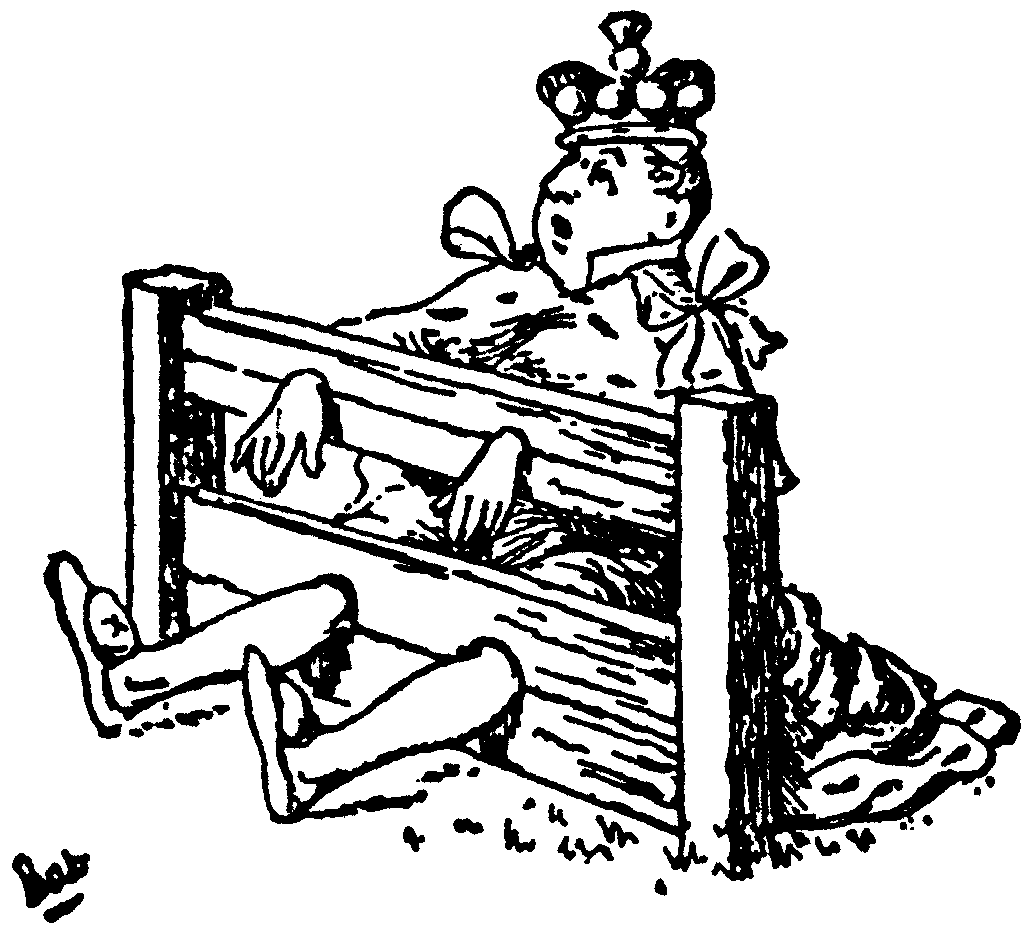
So, in general – good.  However, the Bills intention that the House remains impotent to block Commons legislation (being able to revise and delay at best) must in time be subject to stress if the Lords (elected proportionally) can lay claim to being more representative of the national will than the Commons (elected by first past the post).

Also, the bishops?  What’s that all about?  Now, I like the Church of England as much as the next bloke, but really I’ve no wish to have bishops revising legislation.  If they want to be in politics, let them stand for election like everyone else.  Moreover, the status of established church isn’t good for the Body of Christ and the bishops and the CofE should reject it (in my humble opinion).  This viewpoint, by the way, makes me a disestablishmentarian – so there!

My idea has always been to make becoming a Lord akin to jury service – your name is picked out of a hat at random and you serve for the alloted period.  Or like the national lottery – you pay a nominal deposit to be “in it” and if your number comes up – congratulations – you’re a Lord!  I will submit these ideas to the official consultation exercise (perhaps).  The deposits so gathered could go to good causes (opera houses, the Millenium Stadium, London 2012 etc.) like the lotto does.

I will leave you with the proposal they settled on in Iolanthe, as the Queen of the fairies decrees: “Peers shall teem in Christendom, And a Duke’s exalted station Be attainable by Competitive Examination!”  And in case you think all this talk of Iolanthe isn’t true to life, let me remind you that when Strephon is returned to Parliament as a Liberal-Conservative!

Posted in Constitutional Law, Ecclesiatical Law, News, Politics | Tagged , , , , , , | 6 Comments

Law sucks!

In a recent edition of The Lawyer, reporting on Irwin Mitchell‘s plans to float and take on the mid-tier (whatever that means), managing partner John Pickering is quoted as saying:

“It’s about deconstruction of the law, like [consultants] Stephen Mayson or Richard Susskind have explained in the past, trying to reduce it to an operational process.”

Reducing law to an operational process?  Great!  Calls to mind the words of Steve Martin in the film All of Me:

“You’re like an energy vampire. You suck the life out of people and take the fun out of being a lawyer. “

Posted in Just for Fun, News | Tagged , , , | Leave a comment

Proust on law as a career choice

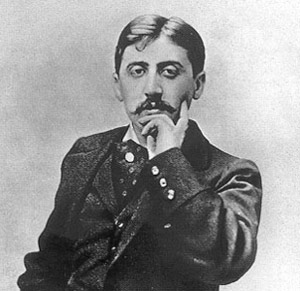
“Even in my most desparate moments, I can’t conceive of anything more odious than becoming a lawyer.”

Marcel Proust (1987-1922)

Posted in From the Archives, Just for Fun | Leave a comment

The last of the manifestos (with dolphins)

Two Pacific White-sided dolphins (Lagenorhynch...

Image via Wikipedia

And so last – but not least – it is time to run the rule over the civil justice proposals from the manifesto of the Scottish Green Party, who have serious aspirations to increase their number of MSPs as the appeal of the Lib Dems as a protest vote fades.

The Greens propose the following:

  • equal marriage laws (as one might expect);
  • to “defend the right to peaceful public protest as a vital part of democratic change, and if necessary will legislate to protect peaceful protesters from heavy handed tactics such as kettling, bribery and intimidation, or undercover surveillance.”;
  • ending the blanket ban on prisoners voting, with the right to vote possibly restored as a milestone towards the end of a sentence;
  • fully implement the Aarhus Convention, to ensure access to environmental justice with a funded system of environmental and land courts;
  • land reform: a Common Good Act and a Land Rights Law Centre – plus consultation on proposals to bring the administration and revenues of the Crown
    Estate
    under local democratic control.
  • oh – and lots more dolphins, too.

So, the Greens hitting a lot of targets here – including some topical civil liberties right to protest stuff.  I did not know that the police sometimes used heavy-handed bribery as a tactic, however.  For the record, I would usually be quite happy to accept money to stay at home on the day of any major protest – but not if my bribe is paid impolitely.

The Greens also oppose the use of fingerprinting in schools.  However, pretty much all use of fingerprint technology in schools in Scotland is optional.  Its widespread use in schools where it is used to pay for school meals or access library services is due to willing take-up by pupils and parents (who are offered alternatives if they don’t want to be fingerprinted).

Overall, you feel in safe hands with the Greens when it comes to equality and civil liberties issues.  And the manifesto shows that they’re thinking about how to implement some of these ideas in practical terms as well.

A Land Rights Law Centre sounds nice, although there is already an Environmental Law Centre in Scotland.

The Greens manage to cut a neat third way through the prisoners’ votes argument, and seem to have quietly dropped all mention of their opposition to denominational schools.  One thing they are definitely in favour of though is dolphins.  Lots of dolphins.  And whales.  And the tourists who want to come see them.

So, if you don’t vote Green on election day, that’s basically the same as punching a dolphin on the nose.

Posted in Law Centres, Politics | Tagged , , , | Leave a comment

More manifestos on civil justice etc.

Today, it’s the turn of the Scottish National Party and the Scottish Socialist Party

Scottish National Party

Easily the biggest manifesto of the bunch, complete with “what I did this Parliament” style scrapbook section.  But what of the proposals for civil justice?

  • Kicks off with a laudible statement of intent: “The SNP believes that justice must be available to everyone irrespective of their wealth.”
  • Commitment to “take forward” the recommendations of the Gill Review.  Not much specification on which ones, though.
  • Will seek to introduce a form of Class Actions.  Cool!
  • Slightly less nervous about the SNP’s statements on civil legal aid than the other main parties, though it’s clearly in for a rough ride whoever gets in.
  • The manifesto boasts about having incrased the upper income limit for civil legal aid “making more people potentially eligible for legal aid”.  More accurately, should say that it makes more adults eligible for legal aid, while other measures introduced made many, many more children not eligible for legal aid.
  • Reform of damages law “building on” work of the Scottish Law Commission.
  • Will consult on same-sex marriage and registration of civil partnership.

And if you’ll excuse me a small detour down the education law avenue …

  • “From August this year there will be a new legal limit of 25 on class sizes in Primary 1.” (unless the parent appeals, in which case it’s still 33!)
  • Will introduce a strong presumption against the closure of rural schools – what again?  Doesn’t that amount to an admission that they messed up the current Act which is all of one year in force?
  • Will work to ensure the words of the Education (Additional Support for Learning) (Scotland) Acts 2004 & 2009 are reflected in real improvements for the children with additional support needs and their parents.  And so say all of us!

So, all in all, pretty good all things considered.

Scottish Socialist Party

One of many, many, many left wing parties you can now choose to vote on – with the probable outcome that none of them will be elected.  The front cover of the manifesto features George Osbourne panning in a window.  But what’s on the inside?

  • A system of accountability over the Crown Office Procurator Fiscal Services, judges and sheriffs, with the involvement of organisations such as the Law Society of Scotland and Victim Support Scotland.
  • Extend ability to claim legal aid regardless of income for any case where a victim is seeking protection from unsafe contact abuse, violence, stalking, and harassment.
  • The extension of legal aid to cover workplace and consumer disputes.
  • All families with children who have been awarded on the higher rate care
    component of DLA to be entitled to at least 4 weeks respite care per year.

I could go on, but there is a general problem with the manifesto which is that it doesn’t appear to have been proof-read, with the result that it contains a number of statements which are out-of-date and make it look like the SSP don’t know what they are talking about.

For example, it calls for the Disability Discrimination Act to be replaced (it was, in October 2010).  It talks about children with “special needs” which hasn’t been the correct terminology in Scotland for half a decade and it discusses reform of “school boards” which were replaced by parent councils by the last Labour / Liberal administration.

There are, it would be fair to say, spending implications to the manifesto.  If they ever get into coalition, there are going to be a lot of disappointed voters out there.

Posted in Legal Aid, Politics | Tagged , | Leave a comment

Drumchapel Memories

So, here’s where I got started in law centres …

Look what I found while clearing out the spare room.  The good old Drumchapel Law & Money Advice Centre, where I was a student placement, then volunteer, then money adviser over a number of years.  Back in the days when I knew about social security law (a mystery to me now) and where I made my first baby steps into education law with a booklet on bullying.  That’s me at the back, looking young and dapper in my shirt-sleeves, if you’re wondering!

Jim Gray, who was the principal solicitor at the time, put a lot of faith in me and let me loose on small claims, social security Tribunals, legal research, articles and publications, real life clients, advice and assistance forms.  Without all that, I probably wouldn’t have got my traineeship.  Drumchapel is also where I worked alongside Nicola Sturgeon before she was second in command of the whole country.  I have a lot to thank DLMAC for and so I do so, publically, here and now.  Thank you DLMAC!

Posted in From the Archives, Glasgow, Law Centres | Tagged , , | Leave a comment

Manifestos on civil justice etc.

The number of seats won by each party in the S...

Image via Wikipedia

As you will no doubt be aware, the campaign for the 2011 Scottish Parliamentary election is now underway.  As far as I can see, not all of the manifestos have been launched yet, but I thought I start with those I could find, and add the others later …

In particular, I am interested in what the political parties are promising re: civil justice, civil liberties and civil law more generally.  Some edited highlights follow.

Scottish Liberal Democrats

  • limiting the use of biometric data in schools, forbidding the fingerprinting of pupils without parental consent and ensuring that any data so collected is stored securely and subsequently destroyed;
  • extending the scope of Freedom of Information legislation to include any organisation spending public money;
  • cracking down on the use of surveillance by local authorities, and other public bodies;
  • ensuring that asylum seekers have access to “good legal advice early on” and throughout the process;
  • working with the Scottish Legal Aid Board (and others) to continue to deliver publically funded legal assistance while making “efficiency savings”;
  • ensuring that Scotland complies with its international obligations under the Council of Europe Convention Against Trafficking in Human Beings;
  • extending marriage to gay couples, and civil partnership to straight couples;
  • developing a national disability strategy for Scotland, with measurable outcomes;
  • implementing the Gill Review to allow easier access to environmental justice thus ensuring compliance with the Aarhus Convention;
  • legislating to give force to the Scottish Veterans’ Charter in all parts of government.

Scottish Labour

  • giving community councils and residents’ groups a formal right to apply to Councils for a fast-track ASBO;
  • introducing legislation requiring private landlords to act against anti-social residents;
  • supporting the Scottish Legal Aid Board in their drive to ensure that funds are directed to those most in need and that legal aid is administered and delivered as effectively as possible;
  • working to ensure communities are better supported by the Scottish legal system, through law centres, the Citizens Advice Bureau and other advice providers;
  • supporting the measures proposed in the Damages (Scotland) Bill and the Protection of Workers (Scotland) Bill, with particular emphasis on protecting public service workers from physical and verbal abuse;
  • introducing new laws to ensure that employers can be “effectively held to account for accidents to employees which are a result of negligence by employers”;
  • reviewing the legislation relating to Fatal Accident Inquiries.

Scottish Conservatives

  • reforming legal aid, in particular the scope of civil legal aid;
  • encouraging better partnership working between the different agencies to ensure that anti-social behaviour is tackled swiftly and effectively;
  • amending the Land Reform Act (Scotland) Act 2003 to remove urban access lanes from its scope;
  • legislating to tackle the problem of high hedges where no agreement can be reached between neighbours.

And my thoughts …

  1. Boy, am I nervous for the future of Civil Legal Aid!  Near unanimity on this showing on the need for reform, prioritising resources and saving money.  I suspect that means ultimately fewer lawyers for people who can’t afford to pay for them.
  2. I like the Lib Dems stuff on rolling back the surveillance state (even if the compulsory fingerprinting of pupils isn’t actually a huge issue in Scotland, as it has been in some schools in England) and their concern for meeting our various international treaty obligations.  A Scottish disability strategy would be nice too.
  3. Some interesting ideas from Labour about increasing the use of ASBO’s – although I would want to be clear on what safeguards would be in place to stop community councils etc. from misusing their powers.  Similarly, I am not sure what the protection of workers measures would actually involve in terms of changes to the law.
  4. Very little from the Tories on these points in a slimline manifesto.  Their statement of Civil Legal Aid is at best uninformative – but reads to me like another cut in the making.  Those high hedge neighbour disputes do need sorting out, though.

Should I declare my membership of the Scottish Liberal Democrats at this point?  I probably should, although you may have worked that much out already!

The other parties, soon.

Posted in Freedom of Information, Legal Aid, Politics, Privacy, Scottish Parliament | Tagged , , , | 1 Comment

Council rebuked for failings in parental involvement

One of my cases was featured in The Herald today, under the heading “Council failed parents over headteacher appointments.”  The article sets out the Scottish Government‘s formal response to complaints by parent councils in Glasgow about a failure by the Council to consult with them regarding the appointment of headteachers.

The relevant law is found in the Scottish Schools (Parental Involvement) Act 2006 – s.14 requires that in relation to the posts of headteacher and deputy headteacher, the “appointment process must entail involvement in it of any Parent Council established for the school to which an appointment is to be made.”  The detail of that involvement can be found in the suitably named Parental Involvement in Headteacher and Deputy Headteacher Appointments (Scotland) Regulations 2007 and – critically – involves a measure of pre-appointment consultation in relation to recruitment strategy and job or person specification even where the post is to be filled by internal redeployment.

My thoughts on the matter as quoted in The Herald follow:

Iain Nisbet, of the Govan Law Centre, who brought the complaint on behalf of the parents, said the ruling had significant implications.

“This is a very important decision that underlines the importance of parental involvement in school education and shows the legal arguments of the parents were correct all along,” he said.

“The decision is a reminder to councils across Scotland that they cannot simply pay lip service to their duties to consult with parent councils.

“It is also a rebuke to Glasgow City Council, who, from the very beginning, have refused to concede they did anything wrong in acting in this way.”

Mr Nisbet said it was a “great pity” the decision came after the case had been dropped because of lack of support from the Scottish Legal Aid Board.

Posted in Education Law, Employment Law, Glasgow, Law Centres, Legal Aid, News, Scottish Government | Tagged , , | Leave a comment

Hey! Where’s my web review?

On my head.

No, not really.  For those of you who were wondering about the lack of a web review in this month’s Journal (anyone? – oh. okay!) I was taking a well earned break, and have already delivered April’s review, which will be published in a couple of weeks.

I thought you’d want to know.

Posted in Journal Website Reviews | 1 Comment

Inner House finds against City of Edinburgh Council

An excellent decision by the Inner House on placing requests to special schools.  A bench consisting of the Lord President, Lady Cosgrove and Lady Paton handed down a unanimous decision in the case of City of Edinburgh Council v. Mrs. MDN, an appeal against a decision of the Additional Support Needs Tribunal.

My favourite passages is in paragraph 26 of the decision:

“In our view the approach of the Tribunal on this matter was clearly correct. Paragraph 3(1)(f)(iii) identifies the matters, and the only matters, to which the authority (and the Tribunal) have to have regard when deciding whether it is not reasonable to place the child in question in the requested school. These are the respective suitability and the respective cost (including necessary incidental expenses) of the provision for the additional support needs of the child in the two schools under consideration. Both those matters relate to, and relate only to, the child in question and the provision of additional support needs for him or her. The position, and any consequential expenditure by the authority, in respect of any other child or children is irrelevant to this exercise.

In other words, the education authority cannot emotionally blackmail decision makers by claiming that if the Tribunal awards one child a suitable (yet expensive) educational placement then they will have no choice but to disadvantage other vulnerable children by cutting back on their support.

Posted in Court of Session, Edinburgh, Education Law, News | Tagged , , | Leave a comment