SCOLAG Education Law Update

This month’s SCOLAG Legal Journal features the six monthly Education Law Update (2011 SCOLAG 47).  It includes summaries of the following cases:

  • A v. Essex County Council [2010] UKSC 33
  • KP v. Herfordshire County Council [2010] UKUT 233 (AAC)
  • NG-I v. Wiltshire County Council [2010] UKUT 242 (AAC)
  • CP v. M Technology School [2010] UKUT 314 (AAC)
  • West Sussex County Council v. ND & LD [2010] UKUT 349 (AAC)
  • Bury Metropolitan Borough Council v. SU [2010] UKUT 406 (AAC)
  • CB v. Suffolk County Council [2010] UKUT 413 (AAC)

2011 subscriptions now available.

Posted in Education Law, Supreme Court | Tagged , | Leave a comment

Grand Old Duke of York – austerity cuts strike

Well, it’s been quite a week for me in the newspapers!

First the Scotsman, and then (on Wednesday) The Herald’s diary pages, with the following gem.

Our story about the Australian newspaper apologising for stating 30,000 pigs were drowned in the flooding when the farmer had in fact said “30 sows and pigs” reminds Iain Nisbet in Govan: “When I was a toddler my grandfather once won £10 by sending my version of The Grand Old Duke of York into a magazine. In my version, the Duke had ‘ten cows and men’. He did of course, pass the money onto me.”


Posted in Just for Fun | Tagged | 1 Comment

That’s me at the coal face

Apparently, I work at the coal face of law. At least, according to the Scotsman I do …

The breadth of finalists is greater than ever this year, from some of Scotland’s leading commercial firms through to those working at the coal face of law – Ian Nisbet from the Govan Law Centre, the Civil Legal Assistance Office (Highlands and Islands) and the Scottish Court Service (North Strathclyde).

Maybe if I worked for one of those “leading commercial firms” they’d learn to spell my name right?

Posted in Edinburgh, Education Law, Law Centres | Tagged | Leave a comment

Tweeting from UK Supreme Court? No probs!

The Supreme Court has today published guidance on its practice relating to the use of “live text based communications” (e.g. twitter), in the context of ongoing public and professional debate on the issue. Because cases before the Supreme Court do not involve interaction with witnesses or jurors, and because there is rarely any reason why what is said in court should not be placed immediately in the public domain, the Justices of the Supreme Court are content with legal teams, journalists and members of the public communicating to the outside word what is happening in the courtroom.

Important exceptions include cases where there are formal reporting restrictions in place, family cases involving the welfare of a child, and cases where publication of proceedings might prejudice a pending jury trial. Those attending such cases will be informed by notices placed at the doors of the courtroom that restrictions are in place.

Lord Phillips, President of the Supreme Court, commented:

“The rapid development of communications technology brings with it both opportunities and challenges for the justice system. An undoubted benefit is that regular updates can be shared with many people outside the court, in real time, which can enhance public interest in the progress of a case and keep those who are interested better informed.

“We are fortunate that, by the time a case reaches the Supreme Court there is very seldom any reason for any degree of confidentiality, so that questions about what should and should not be shared with those outside the courtroom do not usually arise. This means that we can offer a green light to tweeting and other forms of communication, as long as this does not disrupt the smooth running of the court.”

The new guidance is limited to the Supreme Court because of its unique role as the highest appeal court in the land. Different considerations apply to other courts.

The Supreme Court policy on the use of live text-based communications can be found on its website.  I note that the policy is restricted to “text-based” communications.  So, no twitpics, then?

Posted in News, Supreme Court | Tagged , | Leave a comment

Sheridan seeks silk to sack

Breaking news (of the world):

Tommy Sheridan is searching for a QC to sack publically during his appeal against his conviction for perjury.

Friends said the former MSP and Scottish Socialist party leader was spending what he expects to be his last weekend of freedom for a long time hunting for legal representation so he can ostentatiously dispose of their services at a critical stage during the appellate proceedings.

Sheridan is to appear in court to receive his sentence after being convicted for lying on oath and is expected to be given a community service order lasting several hours – or possibly a lengthy jail sentence.

Mr. Sheridan opted to defend himself during the trial after sacking QC Maggie Scott at an early stage and he is now looking for senior counsel to represent him in the opening minutes of his appeal before casually abandoning them and going it alone once again.

Posted in Criminal Law, Faculty of Advocates, Just for Fun | Tagged , | 3 Comments

Please state your destination …

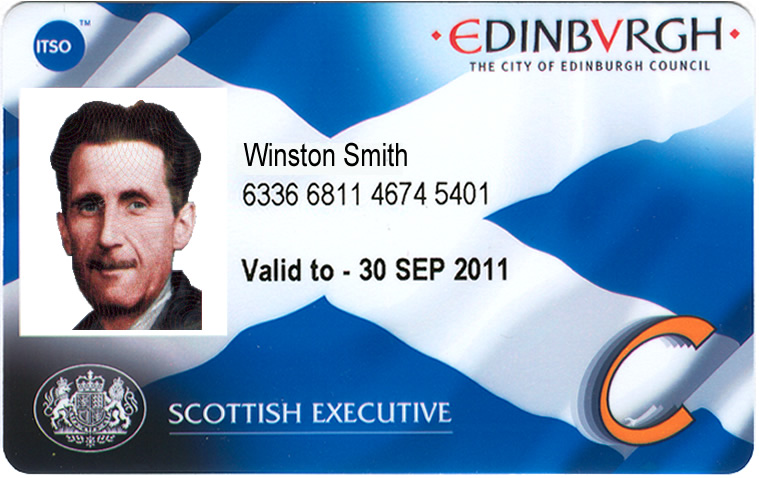
The latest newsletter from the Scottish branch of NO2ID carries an article titled “Scotland’s Back-Door ID Card Battle”, which notes that the SNP were vigorous opponents of ID cards in opposition.

However, it goes on to suggest that the various forms of national entitlement card (e.g. Concessionary Travel Cards; YoungScot Cards) introduced under the previous Labour/Lib-Dem adminstration but continued enthusiastically under this one may be every bit as bad, linked as they are to a “Citizens Account” (unless card-holders explicitly opt-out). Citizens Accounts are records of personal information stored on a network of databases operated by Scotland’s 32 local authorities.

There are other concerns.  When used as a bus pass, personal information about the card-holder is transmitted to the bus operator and details of the passenger and journey are recorded and logged on central government databases.  There are also reports that schoolchildren have been told that they “must” apply for a card to buy school meals – or even to enter school premises.

With the Scottish Parliamentary elections fast approaching perhaps this is an opportunity to ask your candidates why the Government needs to know where your gran went on the bus, or what your son had for his school dinner?

See also:

The Scottish ID Cards Scandal (Dr. John Welford)

Posted in News, Politics, Privacy, Scottish Government | Tagged , | Leave a comment

Lawyers “should take pains to acquire the other Sciences and accomplishments becoming the Character of Gentlemen”

From the Legal Skills Prof Blog (part of the Law Professor Blog Network), I note the following historical excerpt:

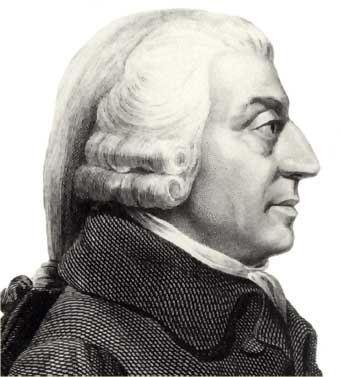
“In his recently published biography of Adam Smith, Nicholas Phillipson describes a period of tumult in Edinburgh following the Jacobite rebellion of 1745. Phillipson notes that the rebellion and its aftermath prompted soul-searching by the elites of Edinburgh, including lawyers (pp. 84-85).

The ruthless campaign to exterminate Jacobitism with the sword had revived long-standing fears that the Crown would attempt to pacify the Highlands by conquest. The lawyers . . . responded to this threat by arguing that the causes of the rebellion had more to do with the structure of clan society than with the ambitions and treachery of a few Highland chiefs, and that the problem of pacifying the Highlands could be better addressed by encouraging civility, commerce and economic improvement than by the use of military force. . . . It was no coincidence that some senior lawyers had begun to ask whether the present state of legal education was appropriate to present needs. Some thought that advocates, like moderate ministers, should be educated as gentlemen. As the new Lord President, Robert Dundas of Arniston, told the Faculty in 1748, ‘Over and above being careful to learn thoroughly the principles of the Roman Law and the Laws of Nature and Nations, they should take pains to acquire the other Sciences and accomplishments becoming the Character of Gentlemen’ and, above all, ‘that rational & manly eloquence’ should be the mark of their profession. . . .

As the Law Prof Blog notes: “Obviously, whatever the merits of calls for other changes in legal education more than 260 years ago, reform then did not include expanding the profession beyond “gentlemen.””!

Posted in Blawgs, Faculty of Advocates, From the Archives | Tagged , , , | Leave a comment

Voice of the Child in the Judicial System – 10 February 2011

Voice of the Child in the Judicial System – 10 February 2011

CHILDREN 1ST is delighted to announce that on 10th February 2011 at the Hilton Edinburgh Grosvenor Hotel, Haymarket, Esther Rantzen CBE, journalist and founder of ChildLine, and the Rt Hon Elish Angiolini QC Lord Advocate will be keynote speakers at ‘Voice of the Child in the Judicial System’.

Esther Rantzen CBE will draw on her considerable experience and passion as a campaigner for child welfare to look at what needs to be improved for children involved as witnesses or victims in court.

The Rt Hon Elish Angiolini QC, Lord Advocate brings her significant commitment to improvements for vulnerable witnesses to a keynote address that will look at recent developments on this issue and the challenges that lie ahead.

As well as these high-profile and influential keynote speakers, this event will also hear from young people about their own experiences, from speakers with in-depth knowledge of recent policy and practice developments around children’s participation in court or in Children’s Hearings, and will debate what change is still needed.

To secure your place, go to:
http://www.children1st.org.uk/event-types/1/conferences-seminars

For more information on this event, please contact
info@children1st.org.uk or T: 0131 446 2300.

Posted in Child Law, Edinburgh, Events | 1 Comment

Scot of the Antarctic (Part 2)

AntarcticaSo, I received a nice letter from the Scotland Office, in response to the question posed by visitor to this site, Tim Macdonald.  His question was:

Why is this necessary given section 29(2)(a) of the Scotland Act 1998?

That is, why is it necessary to reserve Antarctica to Westminster, when s29(2)(a) already states that an Act of the Scottish Parliament has no legislative competence insofar as it “would form part of the law of a country or territory other than Scotland, or confer or remove functions exercisable otherwise than in or as regards Scotland”.

A good question, Tim!  One which (at Tim’s suggestion) I put to the Secretary of State for Scotland, whose plaything the new Scotland Bill is.

The response, from Emma Wagner (Scotland Bill Support Officer) is as follows:

“Thank you for your email on 7th December concerning the Scotland Bill and in particular the clause on the reservation of Antarctica.

“Although as you mention, section 29(2)(a) does place restrictions on the Scottish Parliament from legislating in areas other than Scotland, Antarctica itself is not specifically reserved in Schedule 5 to the Scotland Act 1998. Therefore, despite the restrictions in section 29(2)(a), the Scotland Act does not prevent the Scottish Parliament from legislating with extra-territorial effect where the provision operates as a matter of Scots law, has a demonstrable Scottish connection and is not reserved.

“As a consequence of this, the regulation of activities in Antarctica will be specifically reserved to the UK through being added to Schedule 5 to the Scotland Act.”

So, now you know.

Posted in Constitutional Law, Scottish Parliament | Tagged , | 2 Comments

What I did in my holidays…

Happy New Year!  Hope you had a nice holiday.

I had quite a nice and quite a long holiday from my real work, but here’s what I did with the rest of my holidays (besides relaxing and enjoying myself)!

Back on Yell.com, I have posted a few new thoughts on various legal happenings, including:

I also found time to review the revamped website of the Law Society of Scotland in the Journal.

Enjoy.

Posted in Journal Website Reviews, Yell.com Solicitors Blog | Tagged , , | Leave a comment